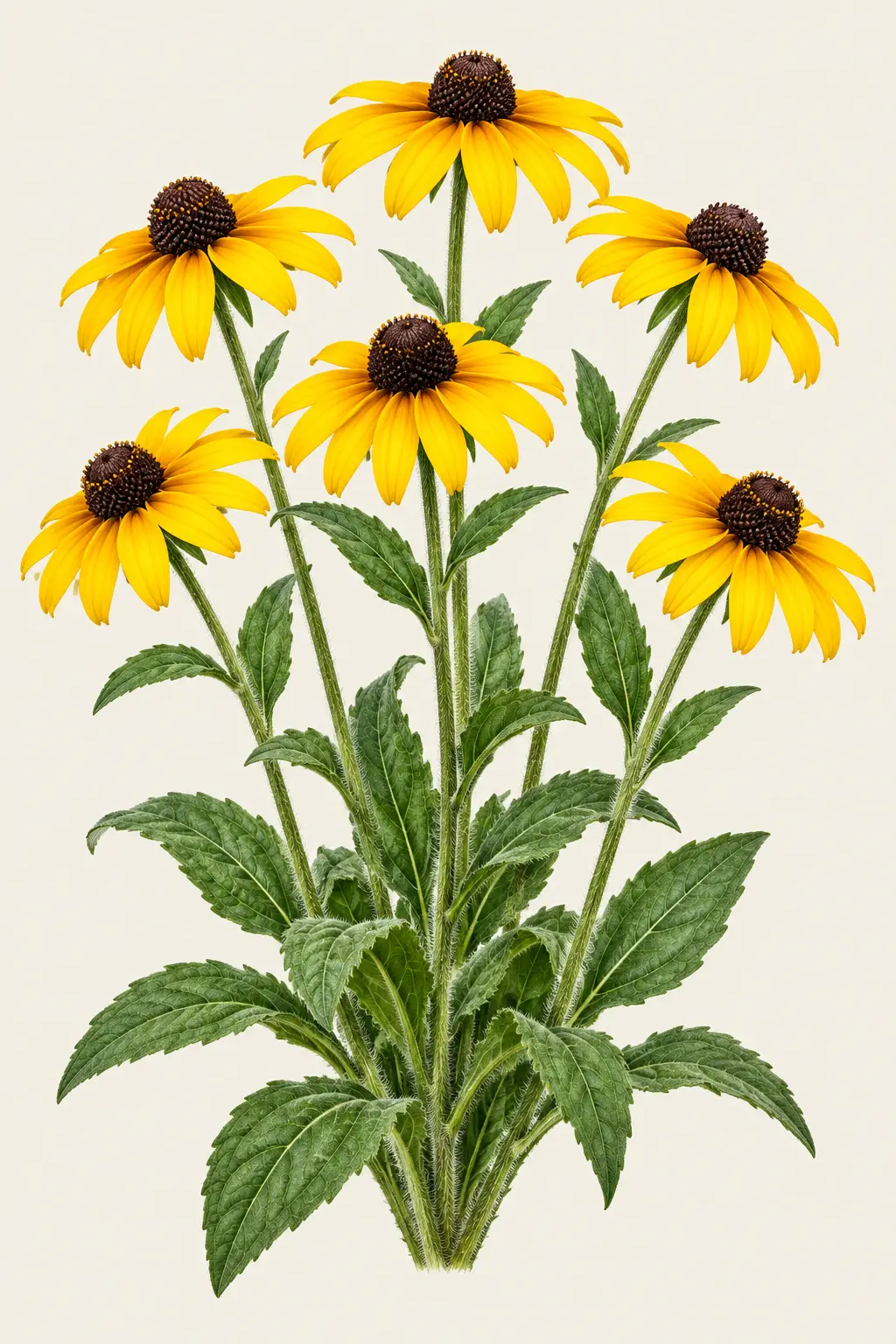
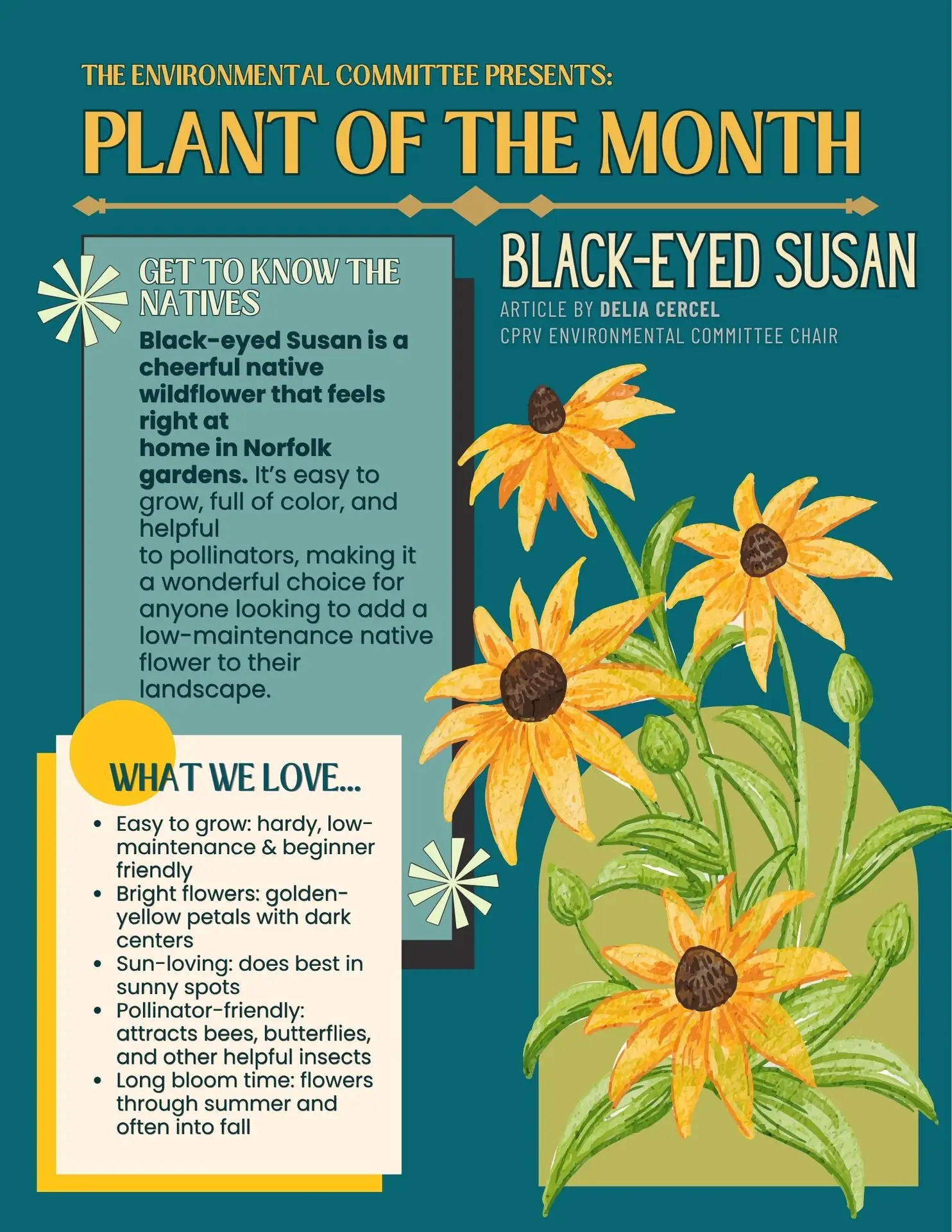
A cheerful native wildflower with golden petals and dark centers, bringing color and pollinator activity to sunny Norfolk gardens.
Adapted from a Plant of the Month feature by Delia Cercel CPRV Environmental Committee · Published May 1, 2026
AI-generated botanical illustration of black-eyed susan; colors and form vary by plant and season.
Light
Full sun
A sunny spot supports a strong flower display.
Soil
Well-drained
Moist soil with good drainage; avoid overfeeding.
Season
Summer into fall
Bright blooms with lasting garden presence.
Get to know the plant
A familiar flower with plenty to offer.
Black-eyed Susan is an approachable choice for neighbors who want a colorful, easygoing planting. Delia Cercel’s original CPRV feature celebrated its cheerful flowers, low-maintenance character, and appeal to bees and butterflies.
In Colonial Place and Riverview, picture a small group beside a sunny walkway or woven into an informal border. Repeating its golden flowers can give a planting a clear rhythm without making it feel overly formal.
Why we love it
Beauty with a purpose
Instant color
Golden-yellow petals frame dark centers, creating a simple, recognizable flower that is easy to enjoy from the sidewalk.
Pollinator appeal
The flowers provide nectar for visiting insects, including butterflies. Seed heads can later offer food for birds.
A generous season
Blooms develop in summer and may continue into fall. Deadheading can extend the display.
A natural fit
Use small groups in borders or give the plant room in a meadow-style or naturalized area.
Know the plant
This guide focuses on Rudbeckia hirta, a biennial or short-lived perennial that can maintain its presence by self-seeding.
A Norfolk garden note
Check sunlight and drainage before choosing a spot. A modest planting you can watch closely is a good way to begin.
A little gold goes a long way.
Black-eyed Susan offers the kind of garden pleasure that is easy to share: a bright flower, a visiting pollinator, and another reason to pause on a neighborhood walk.