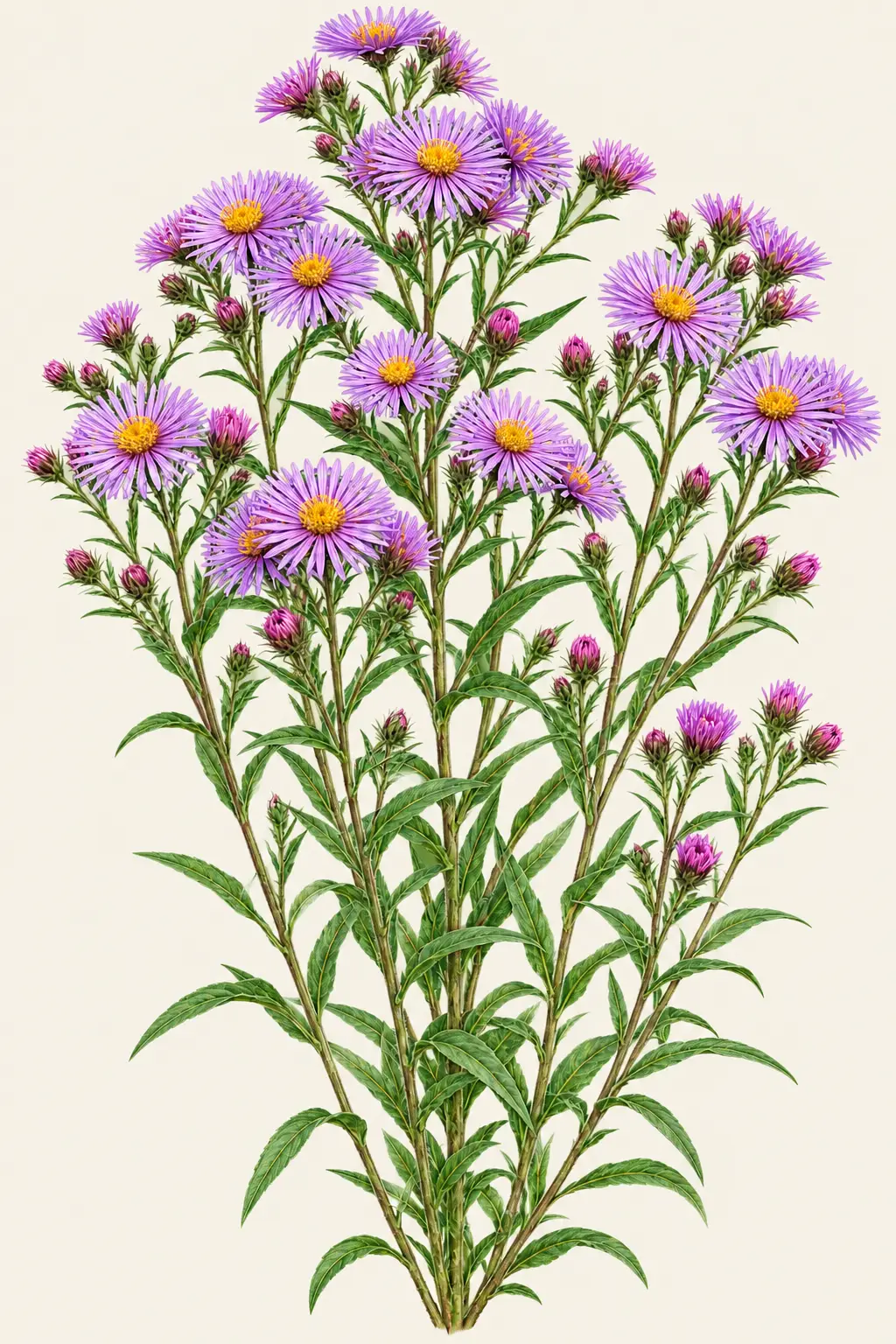
Purple and pink daisy-like flowers give the autumn garden a lively finish, with nectar for migrating monarchs and other late-season visitors.
Adapted from the October 2026 Plant of the Month feature by Delia Cercel CPRV Environmental Committee · Published October 1, 2026
AI-generated botanical illustration of New England aster; colors and form vary by plant and cultivar.
Light
Sun to light shade
A bright position helps the flowers shine.
Soil
Moist, well-drained
Fertile soil with room for roots.
Season
Late summer & fall
A colorful finish as the garden changes.
Get to know the plant
Keep a little color for October.
In CPRV’s October 2026 newsletter, Delia Cercel celebrated New England aster for its purple and pink flower clusters and support for migrating monarchs in Virginia. It is a reminder that a garden’s busiest season does not have to end with summer.
For Colonial Place and Riverview neighbors, fall planting design can begin with one simple question: what will still be flowering when the earlier blooms fade? Asters bring that next chapter into view.
Why we love it
Beauty with a purpose
Autumn color
Clusters of small, daisy-like flowers create a generous display. Purple and pink rays surround bright centers.
Fuel for the journey
Monarch butterflies visit for nectar during migration. Bees and other pollinators also benefit from the late-season flowers.
Give it room
The species can reach 3–6 feet tall. Check the mature size; compact cultivars can suit smaller gardens.
A good companion
Pair asters with goldenrod for a purple-and-gold fall display, or place them among grasses for contrasting texture.
A thoughtful site
Choose moist, fertile soil with good drainage. Occasional dryness is tolerated, but dependable moisture is preferable to a parched bed.
A Norfolk garden note
Leave space for air to move around the clump. Taller plants may need support; consider a shorter selection beside a narrow walkway.
Let the late bloomers have their moment.
There is plenty to enjoy when the neighborhood garden slows down: a flash of purple, a visiting butterfly, and a reason to linger outdoors a little longer.