Golden flower plumes bring warmth, movement, and pollinator activity to late-summer and autumn plantings in Norfolk.
Adapted from a Plant of the Month feature by Delia Cercel CPRV Environmental Committee · Published September 1, 2026
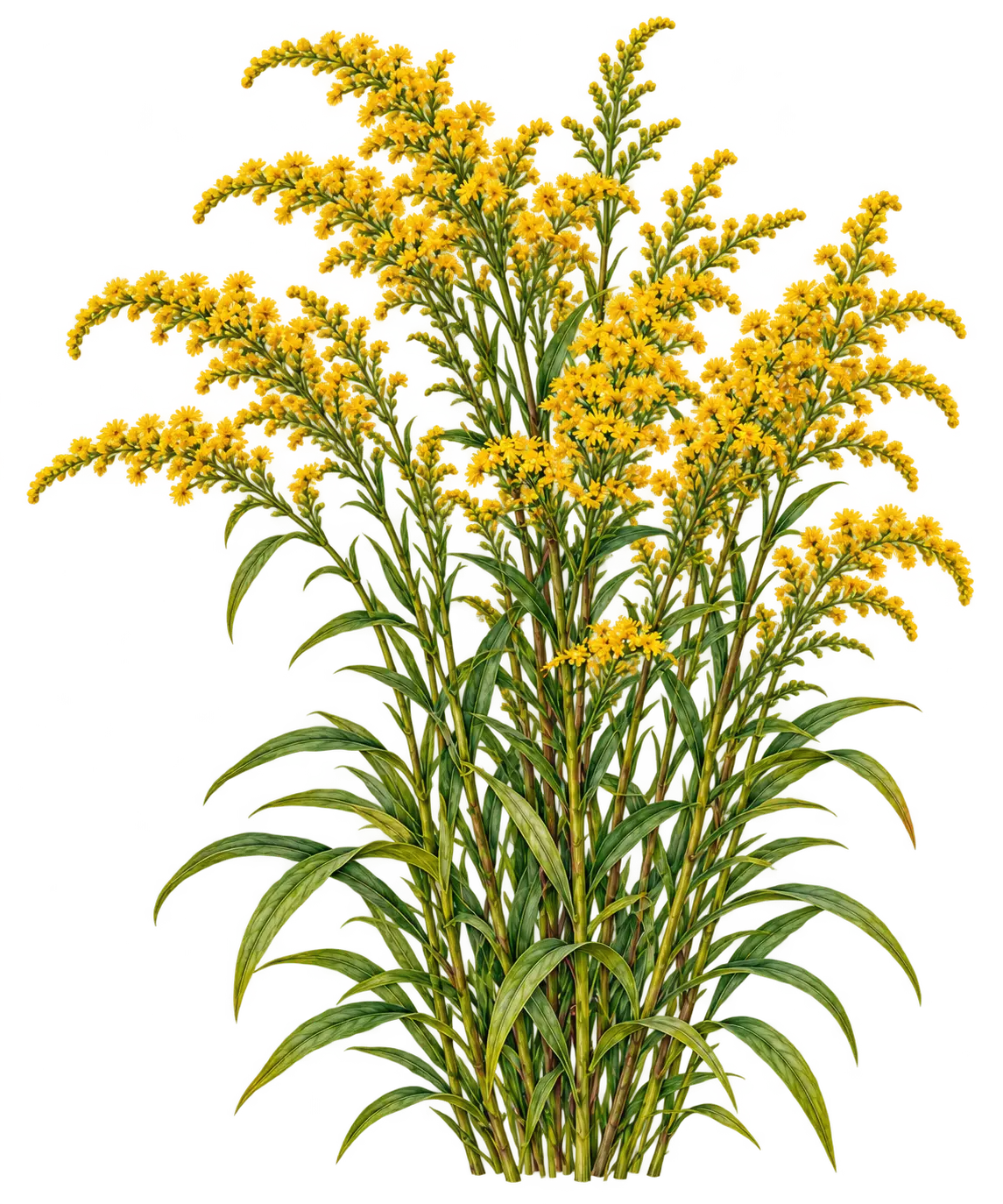
AI-generated botanical illustration of goldenrod; colors and form vary by plant and season.
Light
Match the species
Many goldenrods thrive in full sun.
Soil
Check the plant label
Moisture and drainage needs vary.
Season
Late summer & fall
A warm finish to the flowering season.
Get to know the plant
Keep the color going.
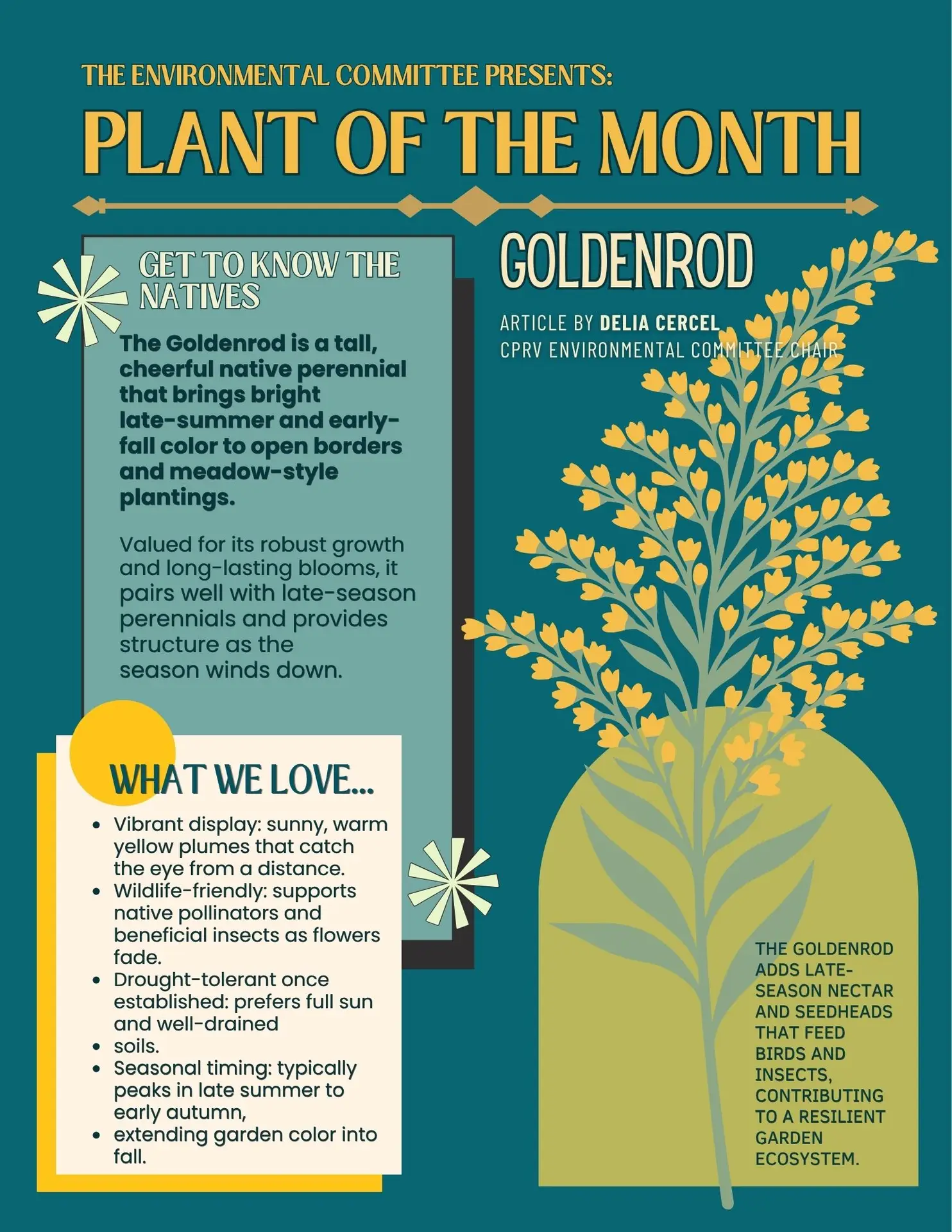
Goldenrod brings a bright finish to the growing season. Delia Cercel’s original CPRV feature described its yellow plumes, robust growth, and role in meadow-style plantings as other flowers begin to fade.
For Colonial Place and Riverview gardens, the useful question is which goldenrod fits the space. Goldenrod is a group of plants, not a single uniform choice. Size, spread, and growing preferences deserve a closer look before planting.
Why we love it
Beauty with a purpose
A warm display
Dense clusters of small yellow flowers read as graceful plumes, adding color and texture to a late-season border.
Pollinator value
Goldenrods attract bees, butterflies, and other insects. Their seeds also provide food for birds.
Room to grow
Some species spread vigorously. Choose a form suited to the size of your garden and the maintenance you want to provide.
A meadow-style partner
Use goldenrod as part of a relaxed planting where its height and movement can complement other late-season perennials.
Choose deliberately
Select a locally appropriate native species and check its mature dimensions, light needs, and soil preferences.
A Norfolk garden note
Before adding a plant, mark out its expected footprint. A little planning helps a generous grower look intentional as it matures.
Let late-season color have the last word.
The original CPRV feature highlighted goldenrod’s cheerful presence and wildlife appeal. A well-matched selection can carry that spirit into a neighborhood garden without asking every yard to become a meadow.