A native ornamental grass that brings warm color, airy seed heads, and lasting structure to sunny Norfolk gardens.
CPRV Environmental Committee · Published November 1, 2026
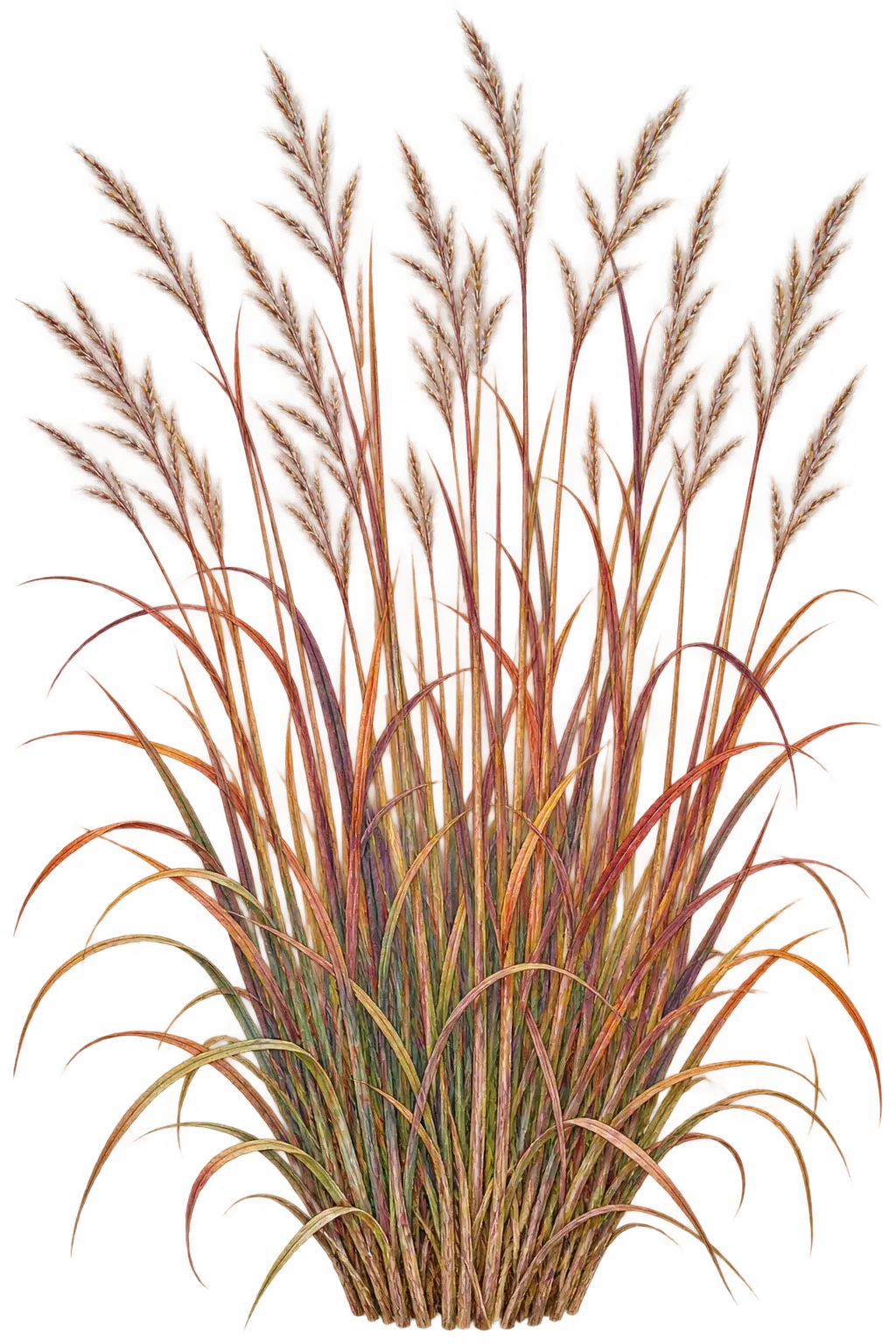
AI-generated botanical illustration of little bluestem; colors and form vary by plant and season.
Light
Full sun
At least six hours of direct sunlight.
Soil
Well-drained
Average soil with good drainage.
Season
Fall into winter
Warm foliage and persistent seed heads.
November in the garden
Beauty beyond the bloom.
Little bluestem is a compact native ornamental grass that brings warm color and texture to the landscape as flowering perennials begin to fade. Its upright shape, changing foliage, and soft seed heads make it especially valuable in fall and winter gardens.
For neighbors in Colonial Place and Riverview, it is an appealing plant to consider when planning a sunny border or a naturalized planting. Let its structure work alongside the quieter shapes of the late-season garden.
Why we love it
Color, texture, and habitat
A warm autumn palette
Blue-green summer blades transition to shades of copper, orange, red, and purplish bronze in autumn.
Winter texture
Fluffy, pale seed heads remain visible well into winter, adding movement and interest to dormant beds.
Wildlife value
Standing stems and seed heads offer food and shelter for birds, beneficial insects, and small wildlife.
Easy to place
Little bluestem looks especially effective in sunny borders, naturalized plantings, and large drifts.
A low-maintenance habit
It forms tidy clumps and performs best in full sun with well-drained soil. Once established, it tolerates dry conditions.
A practical Norfolk garden note
Choose a sunny location that drains well. Leave the seed heads standing through winter, then cut the old growth back in late winter or early spring.
Let the garden keep its winter character.
With its warm fall tones and long-lasting seed heads, little bluestem brings structure and subtle beauty to the landscape long after the growing season ends.
Yes. Choose a spot with at least six hours of direct sun and well-drained soil. It is a better fit for a sunny border than a deeply shaded bed.
Should I cut little bluestem down in November?
Leave the stems and seed heads standing through winter for texture and wildlife cover. Cut them back in late winter or early spring before fresh growth begins.
Does little bluestem help wildlife?
Its seeds feed songbirds and small mammals, its clumps provide cover, and it is a host plant for several butterflies and moths.
Stay connected
Grow a little more neighborhood beauty.
Explore CPRV’s environmental projects and discover more plants for the places we call home.