Pinkish-purple petals, raised cones, and a sturdy upright habit give this perennial a memorable place in sunny Norfolk gardens.
Adapted from a Plant of the Month feature by Delia Cercel CPRV Environmental Committee · Published July 1, 2026
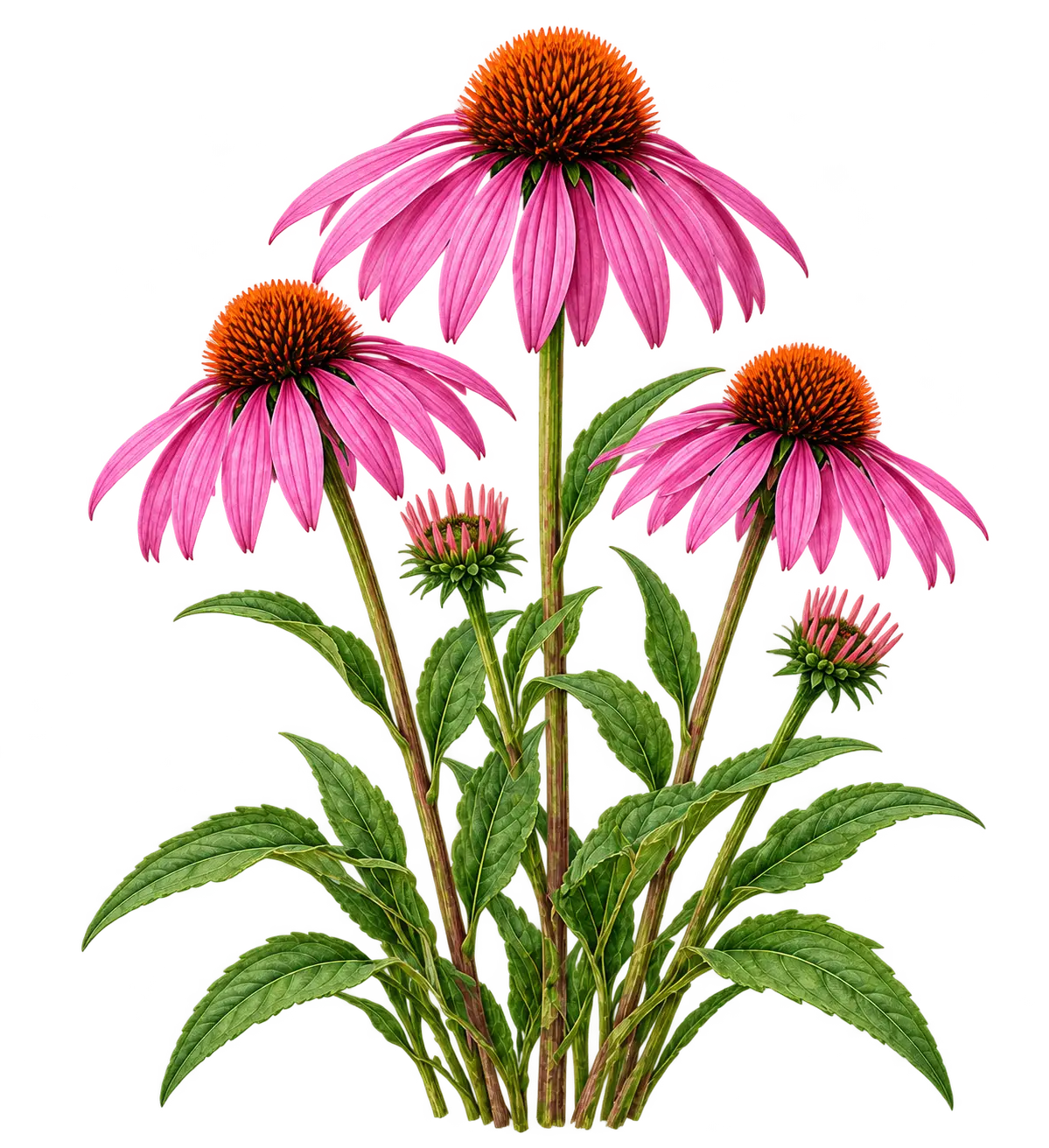
AI-generated botanical illustration of purple coneflower; colors and form vary by plant and season.
Light
Sun to part shade
Full sun works well for a sunny border.
Soil
Good drainage
Adaptable to several soil types.
Season
Summer blooms
Seed heads carry interest beyond flowering.
Get to know the plant
A lasting favorite for sunny spaces.
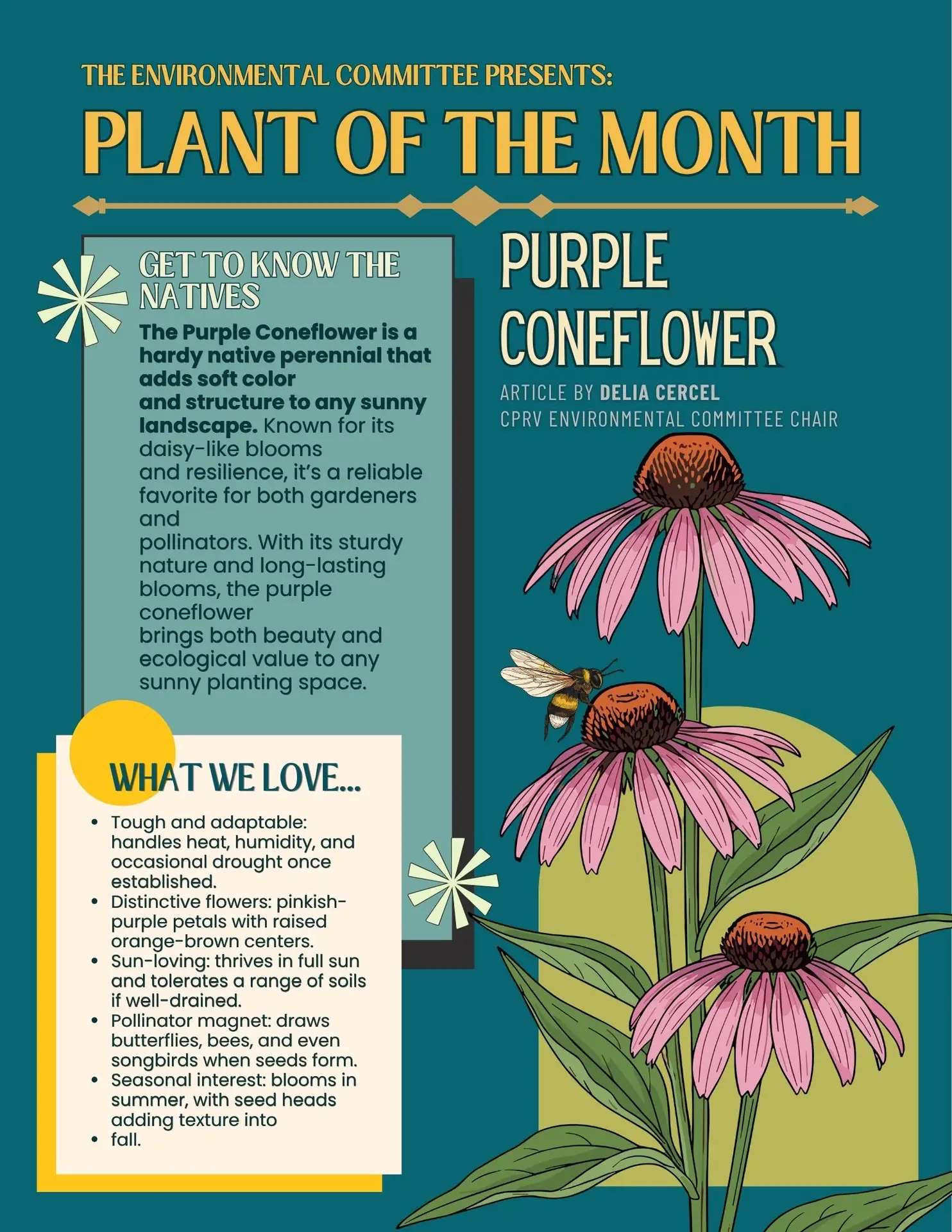
Purple coneflower brings both color and structure to a planting. In her original CPRV feature, Delia Cercel highlighted its daisy-like blooms, resilience, and value to gardeners and pollinators.
For Colonial Place and Riverview neighbors, its distinctive silhouette can anchor a small border or repeat through a larger garden. The combination of soft petals and a strong central cone makes it interesting up close and easy to recognize from a distance.
Why we love it
Beauty with a purpose
A distinctive bloom
Pinkish-purple petals surround a raised orange-brown cone. The flower shape remains striking even in a simple planting.
Summer resilience
Established plants tolerate heat, humidity, and periods of drought, making them useful in a well-chosen sunny location.
Visitors welcome
Flowers attract bees and butterflies. Leave some spent flower heads so birds can enjoy the seeds.
Flexible placement
Plant in borders, informal groups, pollinator gardens, or naturalized areas, allowing space for the mature clump.
More than petals
The seed heads provide a different kind of texture after the flowers fade. A garden can remain interesting beyond peak bloom.
A Norfolk garden note
Watch how light moves across your yard and choose a spot that drains well. Match the plant to the site before deciding how many to add.
Let the garden’s next chapter stand.
A few coneflowers can introduce a repeating color and shape without overwhelming a garden. Pair the planting with a place to pause, and the pollinator visits become part of the enjoyment.